
 security
Maximizing Your Site’s Defenses: Essential Web Hosting Security Features
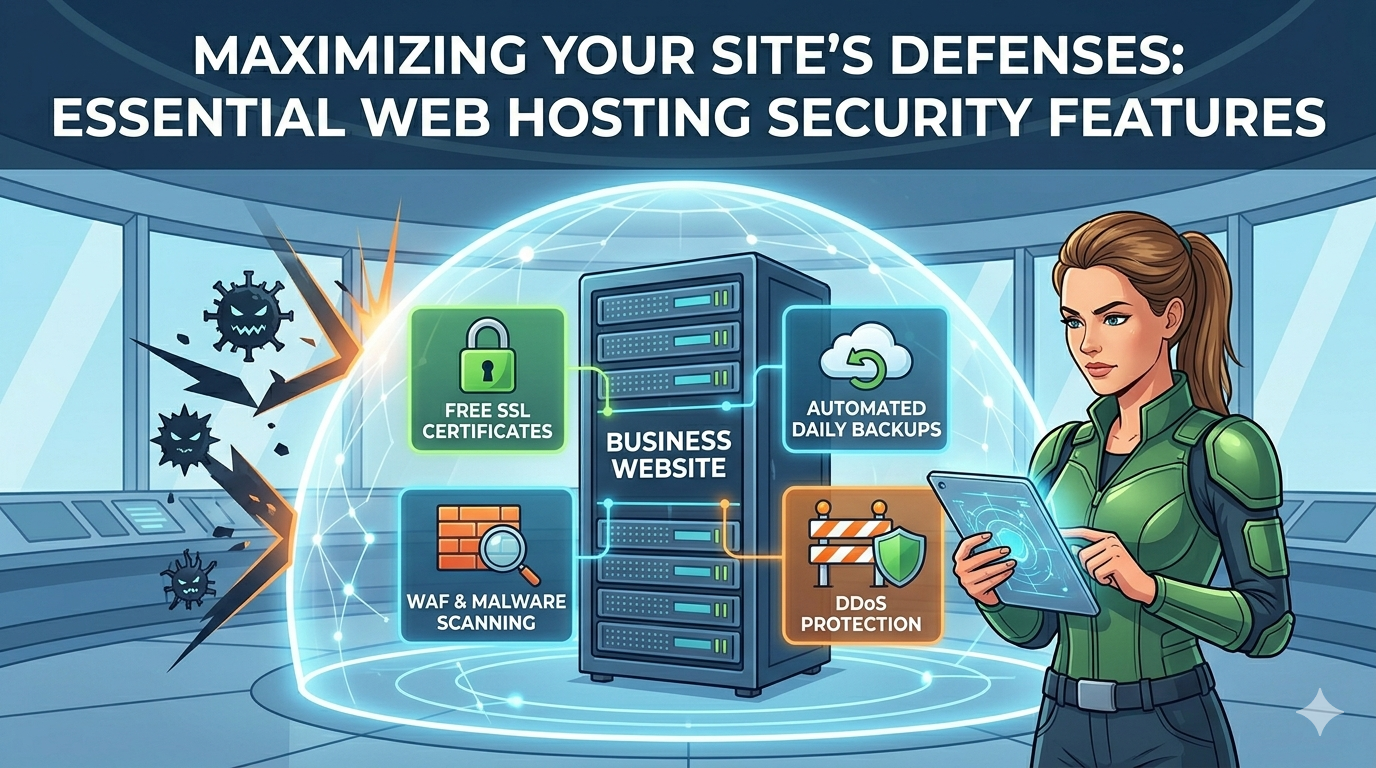
So, you’ve chosen the right hosting plan for your business—congratulations! But the work doesn’t stop at selecting a provider. Your next mission is to ensure that your chosen platform is a fortress against digital threats. For any business website, security isn’t just a feature; it's the foundation of customer trust and operational stability. If your host isn’t doing its part, your site is vulnerable. When evaluating your current setup or looking to upgrade, you must ensure your host provides these non-negotiable security layers. 1. Free SSL Certificates (HTTPS) This is the absolute baseline. An SSL (Secure Sockets Layer) certificate encrypts the data traveling between your customer’s browser and your server. It turns http into https, which is now a standard requirement for search engines and user trust. Never pay extra for a basic SSL; reliable hosts provide them for free. 2. Automated, Daily Backups Imagine logging in to find your site completely corrupted by a failed update or malware. A robust host acts as your safety net by performing automated daily backups. Crucially, they should also offer one-click restoration, allowing you to revert your entire site to a previous safe version in minutes, not hours. 3. Proactive Server Monitoring and Threat Detection Your host should be watching the perimeter so you don’t have to. Good providers offer 24/7 server monitoring to identify and block suspicious activity before it reaches your site. Look for features like: Web Application Firewall (WAF): Blocks common attack vectors like SQL injection and cross-site scripting (XSS). Malware Scanning: Regularly scans your files for malicious code. 4. DDoS Protection Distributed Denial of Service (DDoS) attacks attempt to overwhelm your server with artificial traffic, crashing your site. While major attacks require specialized services, your host should provide baseline DDoS protection to mitigate smaller, common attacks and keep your business online during surges. By demanding these features, you ensure your business website remains safe, trustworthy, and always open for customers.