
 cloud
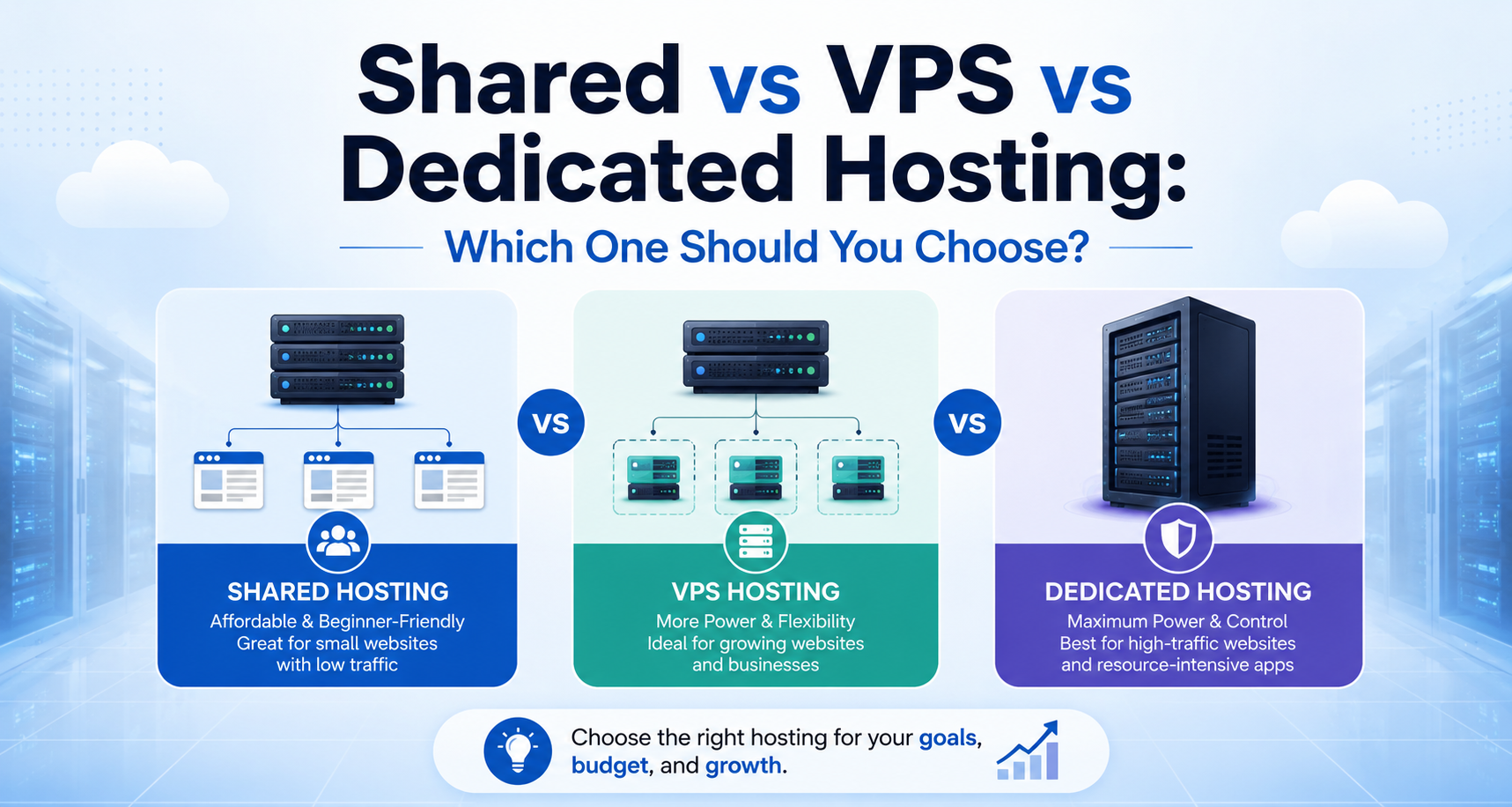
Shared vs VPS vs Dedicated Hosting: Which One Should You Choose?
When selecting hosting for your business website, you will almost always face three options: Shared Hosting, VPS Hosting, and Dedicated Server. At first glance, they may look similar. In reality, they differ significantly in performance, control, scalability, and cost. Choosing the wrong option can either limit your growth or make you overspend unnecessarily. This guide breaks down each hosting type clearly so you can make an informed decision. What Is Shared Hosting? Shared hosting means multiple websites are hosted on the same physical server and share its resources, including CPU, RAM, and storage. Think of it like living in an apartment building. You share infrastructure with other tenants. Best For: New businesses Personal websites Low-traffic company sites Budget-conscious startups Advantages: Most affordable option Simple setup and management No technical expertise required Limitations: Performance can drop if other websites consume high resources Limited customization Not ideal for traffic spikes Shared hosting is a practical starting point but may become restrictive as your business grows. What Is VPS Hosting? VPS stands for Virtual Private Server. A physical server is divided into multiple virtual environments, each with dedicated resources. Using the apartment analogy, VPS is like owning a private condo within a building. You still share the structure, but your resources are reserved. Best For: Growing businesses Medium traffic websites Businesses needing better performance and control Advantages: Dedicated virtual CPU and RAM Better speed and stability More configuration flexibility Scalable resources Limitations: Higher cost than shared hosting May require moderate technical understanding VPS is often the most balanced solution for serious business websites. What Is Dedicated Hosting? Dedicated hosting gives you an entire physical server exclusively for your website. This is equivalent to owning your own house — complete control and no shared resources. Best For: Large enterprises High-traffic platforms eCommerce websites with heavy transactions Applications handling sensitive data Advantages: Maximum performance Full server control Advanced security capabilities Handles very high traffic loads Limitations: Most expensive option Requires technical expertise or server management support Dedicated hosting is powerful but typically unnecessary for small or mid-sized businesses. Direct Comparison Table Feature Shared Hosting VPS Hosting Dedicated Hosting Cost Low Medium High Performance Basic Strong Maximum Control Limited Moderate Full Scalability Limited High Very High Best For Startups Growing Businesses Enterprises Performance Comparison Shared hosting performs well under normal traffic conditions but can struggle during sudden spikes. VPS hosting provides consistent performance because resources are allocated specifically to your website. Dedicated hosting delivers the highest performance, making it ideal for large-scale operations. If speed and reliability directly impact your revenue, VPS or Dedicated is usually the smarter choice. Security Differences Shared hosting environments can be slightly more vulnerable because multiple websites operate on the same server. VPS offers improved isolation, reducing risk from neighboring websites. Dedicated servers provide maximum control over security configurations, firewalls, and monitoring systems. For businesses handling payments or sensitive customer data, stronger isolation is highly recommended. Scalability Considerations As your business grows, your hosting must grow with it. Shared hosting upgrades are limited. VPS allows flexible resource scaling. Dedicated servers offer extensive expansion possibilities but require higher investment. If you plan aggressive marketing or expansion, choosing scalable hosting from the beginning prevents migration challenges later. Cost vs Value Analysis Many businesses start with shared hosting because it is inexpensive. However, if your website generates leads or sales, slow speed and downtime can cost far more than the price difference between plans. Instead of asking, “Which is cheapest?” ask, “Which supports my growth?” Reliable performance is an investment, not an expense. Which Hosting Should You Choose? Choose Shared Hosting if: You are launching a new website Traffic is low Budget is limited Choose VPS Hosting if: Your business is growing You need better performance You expect increasing traffic Choose Dedicated Hosting if: You run a high-traffic or enterprise-level platform Security and performance are critical You need full control over infrastructure For most small-to-medium businesses, VPS offers the best balance between performance and cost. Final Recommendation Hosting should match your business stage — not just your current budget. Start small if necessary. Upgrade strategically. Avoid overpaying for power you do not need. Avoid underinvesting in performance that drives revenue. If you are uncertain about which hosting environment suits your business, a professional assessment can save time, money, and technical frustration. The right hosting ensures your website remains fast, secure, and ready for growth.